

Automotive PCBA covers the control, power, lighting and sensing boards inside a vehicle. Kilandu assembles them on an IATF 16949 certified automotive line in Shenzhen - conformal coating and full functional test - for OEM and Tier-1/Tier-2 buyers in Europe, Russia and the Americas.
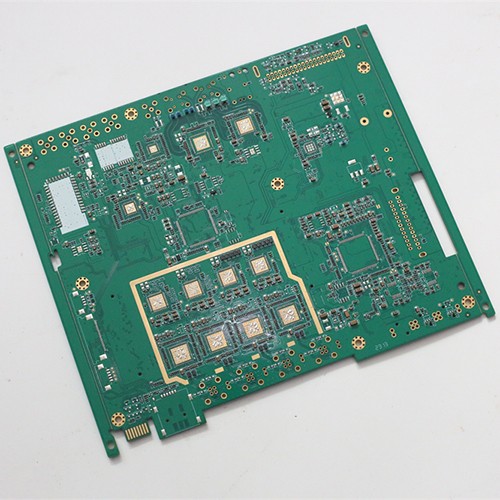
- Body, cabin and gateway control boards
- Power, lighting and motor driver boards
- Sensor and actuator control boards
- Automotive component sourcing and documentation
- IATF 16949:2016 certified
Capability
What Kilandu can build, test and ship for this product family.
| Parameter | Capability |
|---|---|
| Board type | 2-20 layer rigid / flex |
| Components | BGA / QFN / 01005, connectors |
| Testing | In-process SPI + AOI + X-ray; electrical ICT + FCT; burn-in on request |
| Protection | Conformal coating |
| Standard | IATF 16949:2016 |
| Lead time | 2-5 weeks |
Applications
Automotive boards we have built for our customers - open one to see the board.
Automobile intelligent cabin motherboard
Cabin motherboard built with automotive process control and conformal coating. Multi-layer construction, AOI inspected and functionally tested on every unit.
View details →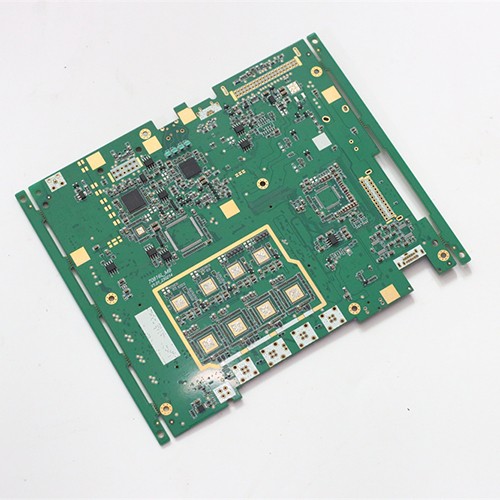
Automobile intelligent cabin control system
Cabin control board mixing SMT logic with through-hole connectors. X-ray checked for hidden solder joints before packing.
View details →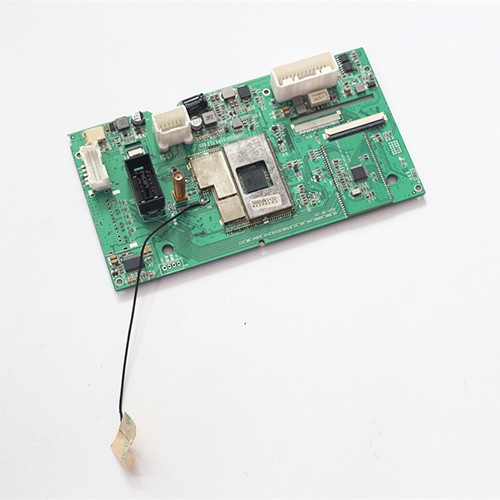
Audi aftermarket central control system
Aftermarket central control board with wireless module placement. Functionally tested against the customer specification.
View details →Certifications and compliance
Certificate numbers are published so your sourcing and audit teams can verify them directly.
Certificate numbers, issuing bodies and validity dates are published on the quality assurance page.
Kilandu holds IATF 16949:2016 (IATF No. 0596984; IATF USI L3A259; ZA-FCAV No. 2600270/R0S) issued by Beijing Zhong An Zhi Huan Certification Center Co., Ltd., ISO 9001:2015 (cert. CN27125Q0392R0S) and ISO 14001:2015 (cert. CN27125E0142R0S) issued by Guangdong ZQ Certification Service Co., Ltd. (CNAS C271-M), and UL File No. E352816 for assemblies covered by that file. Automotive work runs under the IATF 16949 certificate with IPC-A-610 Class 2 or Class 3 acceptance as agreed per project, and every lot ships with lot and serial-level traceability.
Automotive PCBA is manufactured under an IATF 16949 certified automotive quality management system. Certificate numbers and scope are published on the quality assurance page.
The IATF 16949 certificate covers the manufacturing of printed circuit board assemblies (PCBA) and excludes product design under clause 8.3, so design authority stays with your engineering team while process control, traceability and change management are audited to the automotive standard.
How we build it
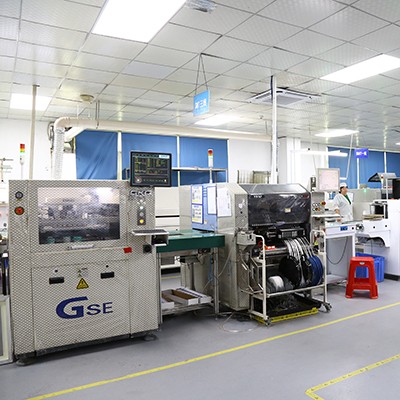
From solder paste to tested board, inside our own factory in Shenzhen.
SMT assembly
01005 chips up to BGA and QFN placed on our high-speed SMT lines and reflowed with lead-free paste.
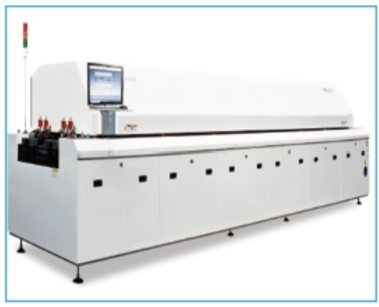
Reflow and wave soldering
Lead-free reflow for SMT, plus our DIP lines with lead-free wave soldering for the through-hole parts.
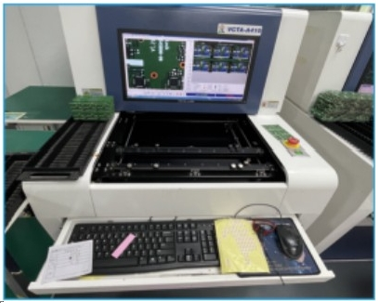
SPI, AOI, X-ray and ICT
3D SPI verifies solder paste volume before placement, AOI inspects every board after reflow, X-ray covers BGA and hidden joints, and in-circuit test runs on fixtures built to your netlist.

Functional test and traceability
Functional test against your own specification, with traceable inspection records issued for every batch.
What automotive work demands of the process
The three things a car programme asks for that a general industrial build does not.
An IATF 16949 quality system in day-to-day production
Automotive work is expected to run inside a registered quality management system rather than alongside one. The process plan, the control plan and the reaction plan exist for the programme, and a deviation is handled through a documented route rather than a verbal one. Our quality system is certified to IATF 16949:2016, and the records it produces are the ones issued with an automotive build rather than a separate set written for the occasion.
Traceability that survives a field return
A part that reaches a vehicle has to be answerable years later. Each automotive build carries lot-level material records, the process record for the work order and the inspection and test results for that batch, so a field return can be matched back to the material and to the process window it was built in. Where the customer's own serial scheme applies, the code on the unit is tied to that record rather than kept in a separate system.
Change control across a production life
Once a programme is in production, changes are the risk. A component substitution, a process adjustment or a tooling replacement is proposed, reviewed against the customer's approval route and recorded before it is run, so the approved configuration and the built configuration stay the same thing. Where a change is forced by a supplier end-of-life notice, it is raised early enough to be planned rather than discovered at the line.
From NPI to volume without a second qualification
Why prototype, pre-production and series builds run on one set of lines.
Automotive programmes usually start with a small number of boards and grow. Splitting the early builds and the series builds across different suppliers is what turns a ramp into a re-qualification, because the process window, the fixtures and the inspection data from the prototype are not the ones the volume build uses. Here the same SMT and through-hole lines, the same inspection regime and the same record structure run from the first prototype through pre-production to series volume.
Prototype and pre-production runs
Early builds follow the same route as production: stencil and paste parameters agreed, SPI + AOI + X-ray in process, ICT + FCT on the electrical side, and the results kept against the work order. That gives the programme a record of how the design behaved before volume, which is what a ramp decision is actually based on.
Mixed SMT and through-hole content
Automotive boards frequently carry fine-pitch controllers next to connectors, relays and other heavy through-hole parts. Both are soldered in the same factory and the same work order, so the sequence - reflow for the surface-mount side, wave or selective soldering for the through-hole content - is planned as one route rather than handed between two suppliers.
What a volume ask changes, and what it does not
Where a programme moves to higher volume, the capacity question is answered with the lines already used for the early builds. Volume changes the material plan and the fixture count, not the process or the record structure; the line list and capacity figures are on the factory capabilities page.
Frequently Asked Questions
Quick answers to what buyers ask us most about this product family.
Is your automotive PCBA line IATF 16949 certified?
Yes. Our automotive line is certified to IATF 16949:2016 (IATF No. 0596984, IATF USI L3A259, ZA-FCAV No. 2600270/R0S, issued by Zhong An FCAV International, valid to 8 Feb 2029), together with ISO 9001:2015 and ISO 14001:2015. The certificate scope covers the manufacturing of printed circuit board assemblies (PCBA) and excludes product design under clause 8.3. IATF 16949 process control and full build documentation are supported for Tier-1 / Tier-2 sourcing.
What test coverage do you provide?
SPI, AOI, X-ray, ICT, functional test, and optional burn-in with full traceability.
Can you support automotive volume plus NPI?
Yes - from prototype/NPI through volume production with managed component sourcing.
What automotive electronics does Kilandu build?
Control units, sensor interface boards, power distribution and conversion modules, lighting controllers, motor drivers and infotainment hardware. Both 12 V and high-voltage power sections are assembled on the same lines.
How is traceability maintained?
Every build carries lot-level traceability from incoming component inspection through SMT placement, DIP, AOI and X-ray where applicable, to functional test and shipment. Records are retained so a reported issue can be traced back to the production conditions that produced it.
Send us your Gerber and BOM
We will come back with a turnkey quotation - PCB, components, assembly and test - usually within one working day.