Welcome to visitShenzhen Jintianlei Innovation Technology Co., Ltd.Official Website!

Turnkey PCBA Manufacturing & SMT Assembly in China
banner
banner
banner
About Kilandu

Kilandu (Shenzhen Jintianlei Innovation Technology Co., Ltd.) is a turnkey PCBA and EMS manufacturer based in Bao'an District, Shenzhen, China. We take projects from Gerber and BOM to tested, ready-to-use boards: PCB fabrication, authorised component sourcing, SMT and through-hole (DIP) assembly, functional testing, conformal coating and final box build.

Our team of 150+ people, including more than 20 engineers and quality specialists, runs 4 fully automatic Yamaha YS24 + YS12 SMT lines and 3 automatic plug-in lines with lead-free wave soldering, giving a monthly placement capacity of 150 million components. Production follows IPC-A-610 Class 2/3 acceptance under an ISO 9001 quality system, with RoHS/REACH-compliant processes and traceable inspection records for every batch.

We support rapid prototyping, small-batch production and volume manufacturing under one quality system, and supply customers in industrial control, EV charging and energy storage, automotive infotainment, medical devices, IoT, instrumentation and smart home across Europe, Russia and the Americas.
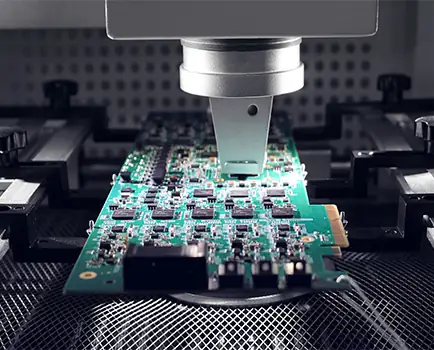
At a glance: Shenzhen, China · turnkey PCBA / EMS · 4 SMT lines + 3 DIP lines · 150M placements per month · ISO 9001, IPC-A-610 Class 2/3 · prototype to mass production.

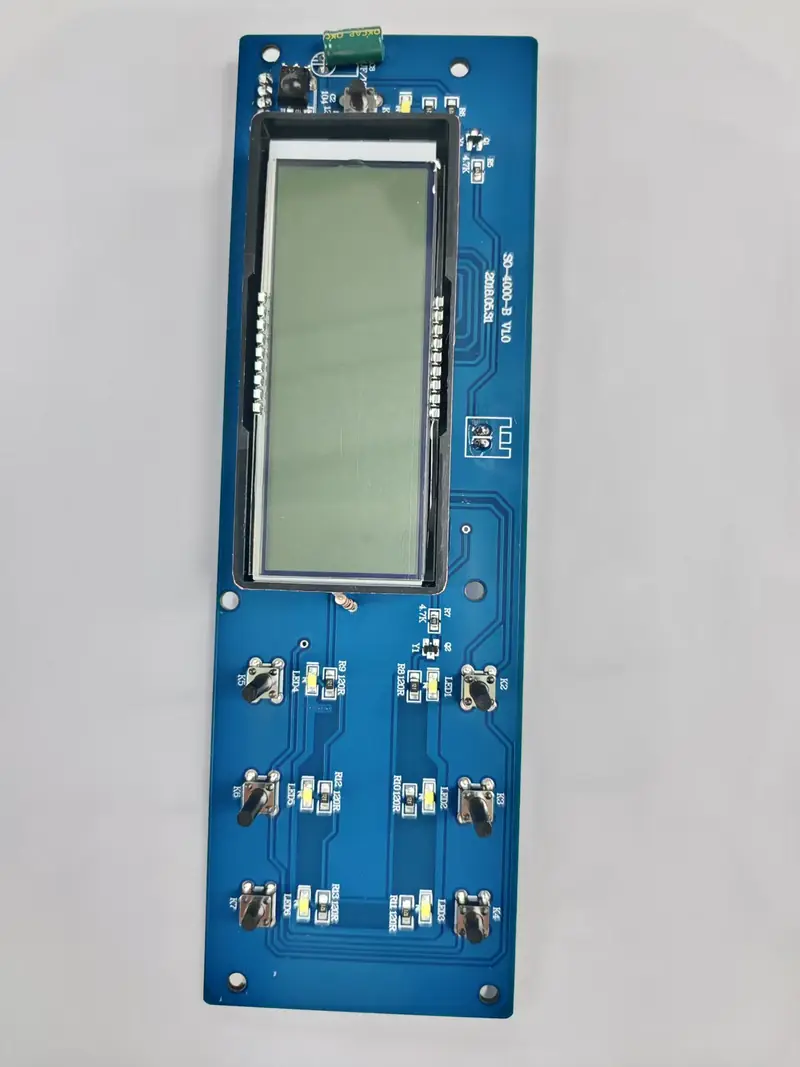
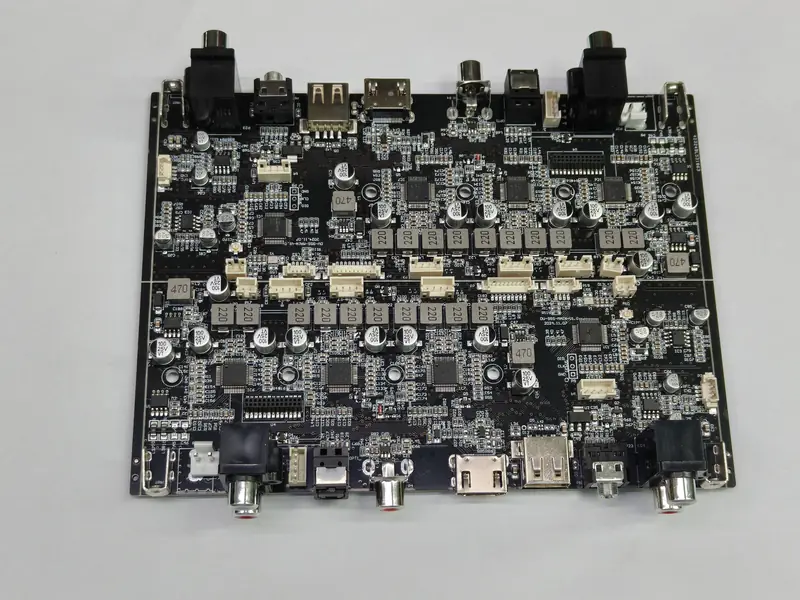
PCBA assembly is the step that turns components and a bare board into a working electronic assembly. It covers solder paste printing, component placement, reflow, through-hole and mixed-technology work, inspection and test - and the result is only as good as the control applied at each of those stages.

Our assembly capability

  • Four Yamaha YS24 and YS12 high-speed SMT lines, about 150 million placements per month.
  • Three automatic DIP lines for through-hole and mixed-technology boards.
  • GKG-G5 solder paste printing with fine-pitch capability, and SITEK 3D SPI inspection.
  • AOI on every board, X-ray for BGA and hidden joints, and functional test to customer specification.

Turnkey or consigned

Kilandu can act as a turnkey partner and source components against your BOM, or assemble material you supply. Either way the build runs under ISO 9001:2015, ISO 13485:2016 and IATF 16949:2016 certified quality systems with ISO 14001:2015 environmental management, RoHS and REACH compliant materials, and IPC-A-610 Class 2 and Class 3 acceptance criteria. Turnkey lead time is typically 2 to 5 weeks.

Incoming control and material handling

Assembly quality is largely decided before the first board enters the line. Components are checked against the bill of materials and the approved vendor list on arrival, with part number, marking, quantity and date code verified before release to production. Moisture sensitive devices are handled within their floor-life window and baked or dry-packed where required, and boards are stored and moved in ESD-protected containers with humidity indicators where the customer's specification calls for it.

What is inspected, and what ships with the order

Every build passes through 3D solder paste inspection before placement, automated optical inspection after reflow, and X-ray where BGA, QFN or other hidden joints are present. Functional test is carried out on fixtures built to the customer's specification, and failed units go through documented rework and retest rather than being passed. Each shipment is accompanied by lot-level records that tie the assembly back to its component lots, reflow profile and test results, together with RoHS and REACH statements on request.

Assembly options

Kilandu can assemble consigned material supplied by the customer or operate as a full turnkey partner and source the entire bill of materials, including long-lead and single-source parts with proposed pin-to-pin alternatives where a part is at risk. Tooling, stencils and test fixtures built for a programme are identified and held for that customer, and customer designs are not reused or disclosed.

Send your Gerber and BOM for a quotation

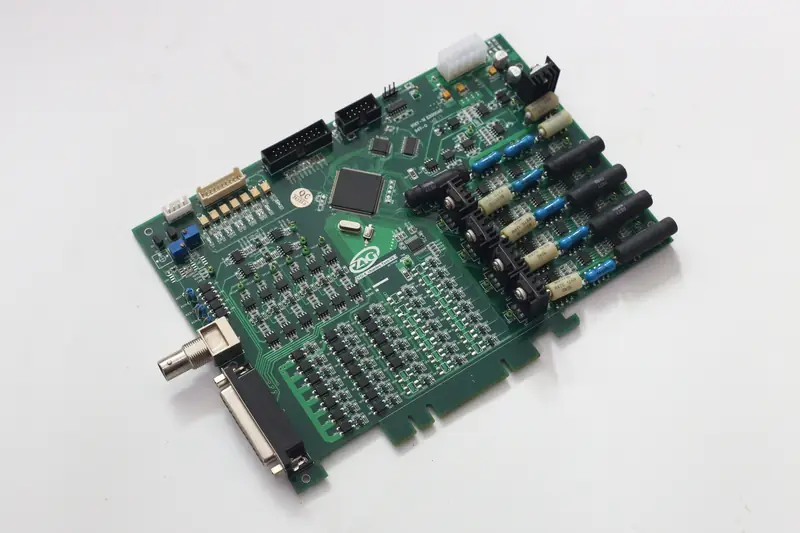
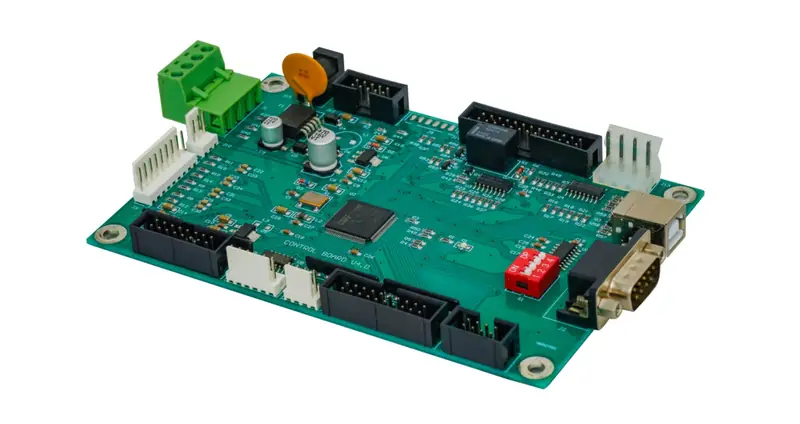
PCBA assembly

PCB manufacturing is where the electrical design becomes a physical board. The choices made here - layer count, base material, copper weight, trace and gap width, surface finish - determine whether the board can be assembled reliably and whether it will survive the environment it is designed for.

What we review before production

  • Layer count and stack-up against the impedance and routing requirements.
  • Base material selection, including High TG laminate for thermally demanding builds.
  • Copper weight, minimum trace and gap, and via structure.
  • Surface finish and solder mask requirements.

From bare board to assembled unit

Kilandu runs the full chain: bare board fabrication through to SMT assembly, DIP and box build, so the stack-up decision is made with the assembly process in view rather than in isolation. Assembly uses four Yamaha SMT lines, three automatic DIP lines and in-line inspection, with functional test to customer specification. Roughly 150 million component placements per month and a typical 2 to 5 week turnkey lead time support both prototype and volume programmes.

Design for manufacture and the questions we ask first

Most avoidable cost in PCB manufacturing comes from a decision that was reasonable in isolation but does not fit the process. Minimum trace and gap against the specified copper weight, annular ring against the via structure, panel utilisation against the board outline, and whether the surface finish suits the assembly process are all worth settling before fabrication is ordered. Kilandu reviews those points at quotation stage, while changing them is still free.

Materials and finishes

Base material is selected against the thermal and electrical demand of the application rather than as a default. Standard FR-4 suits a large share of industrial boards; High TG laminate is used where lead-free reflow of a thick or high-layer-count board, continuous elevated temperature or repeated thermal cycling would otherwise push the laminate through its glass transition. Copper weight follows the current and thermal requirement, and surface finish is chosen to match both the assembly process and the storage life the customer needs.

Quality and traceability from fabrication through assembly

Bare boards are electrically tested and inspected before they move to assembly, and because fabrication and assembly sit in the same supply chain, any issue found downstream can be traced back to the panel it came from. Production runs under IATF 16949:2016, ISO 9001:2015, ISO 13485:2016 and ISO 14001:2015 certified systems to IPC-A-610 Class 2 and Class 3 acceptance criteria, with materials that are RoHS and REACH compliant.

Send your Gerber and BOM for a quotation

PCB manufacturing

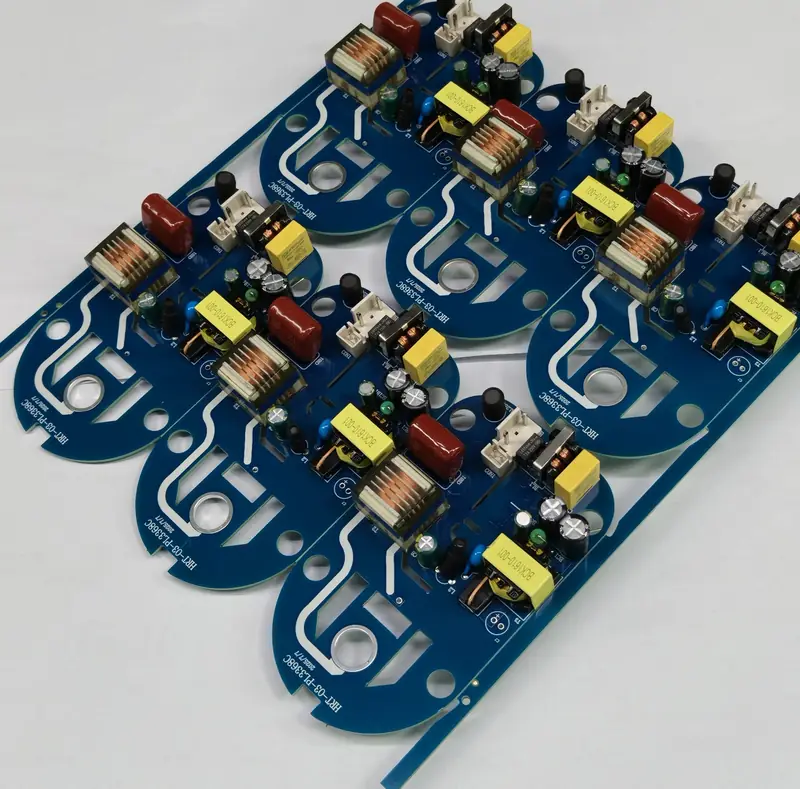
PCB processing covers everything that happens to a bare board before it becomes a finished assembly: drilling, plating, etching, solder mask, surface finish and profiling, followed by electrical test. Process control at this stage decides the yield of everything that comes afterwards.

What the process covers

  • Drilling and via formation, including controlled-depth and filled vias.
  • Copper plating and etching against the specified trace and gap widths.
  • Solder mask and silkscreen, and the surface finish the assembly process requires.
  • Electrical test and final inspection before the boards move to assembly.

How it fits with assembly

Because fabrication and assembly sit in the same supply chain at Kilandu, surface finish, panelisation and fiducial placement can be planned around the SMT and DIP process from the start. Boards then run through 3D solder paste inspection, placement on four Yamaha lines, AOI on every board, X-ray where hidden joints are present, and functional test to your specification.

Process control at each step

Drilling, plating, etching and solder mask each have a window that determines whether the board that emerges is the board that was designed. Trace and gap widths are checked against the specified values rather than a tolerance of convenience, plating thickness in the barrels is controlled so that vias carry the current the design assumes, and solder mask registration is verified so that no pad is partially covered. Where controlled-impedance or high-speed nets are present, the stack-up and finish are agreed before the panel is released.

Why the processing and assembly stages are planned together

Several decisions only look correct in hindsight. Surface finish that suits hand soldering can degrade under multiple reflow passes. A panel that is efficient for fabrication may not suit the placement equipment. Fiducials and tooling holes that were added late may sit where the printer cannot reach them. Planning fabrication and assembly as one process removes those conflicts, which is only possible when both stages sit under the same roof.

Verification before assembly

Boards are electrically tested and visually inspected before release to the assembly lines, so a fabrication defect is caught while it is still a bare board rather than after components have been consumed. Once assembled, the board runs through 3D solder paste inspection, placement on the Yamaha lines, AOI, X-ray where hidden joints are present, and functional test to the customer's specification, with lot-level records retained throughout.

Send your Gerber and BOM for a quotation

PCB processing
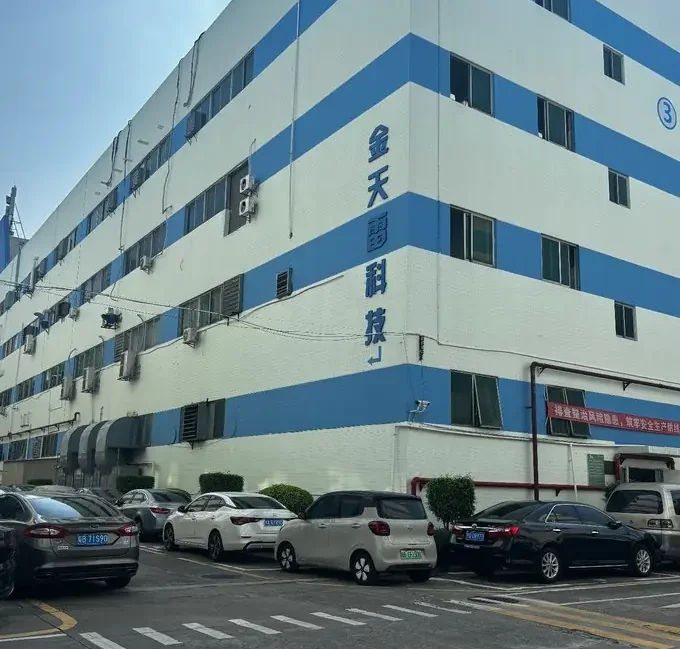
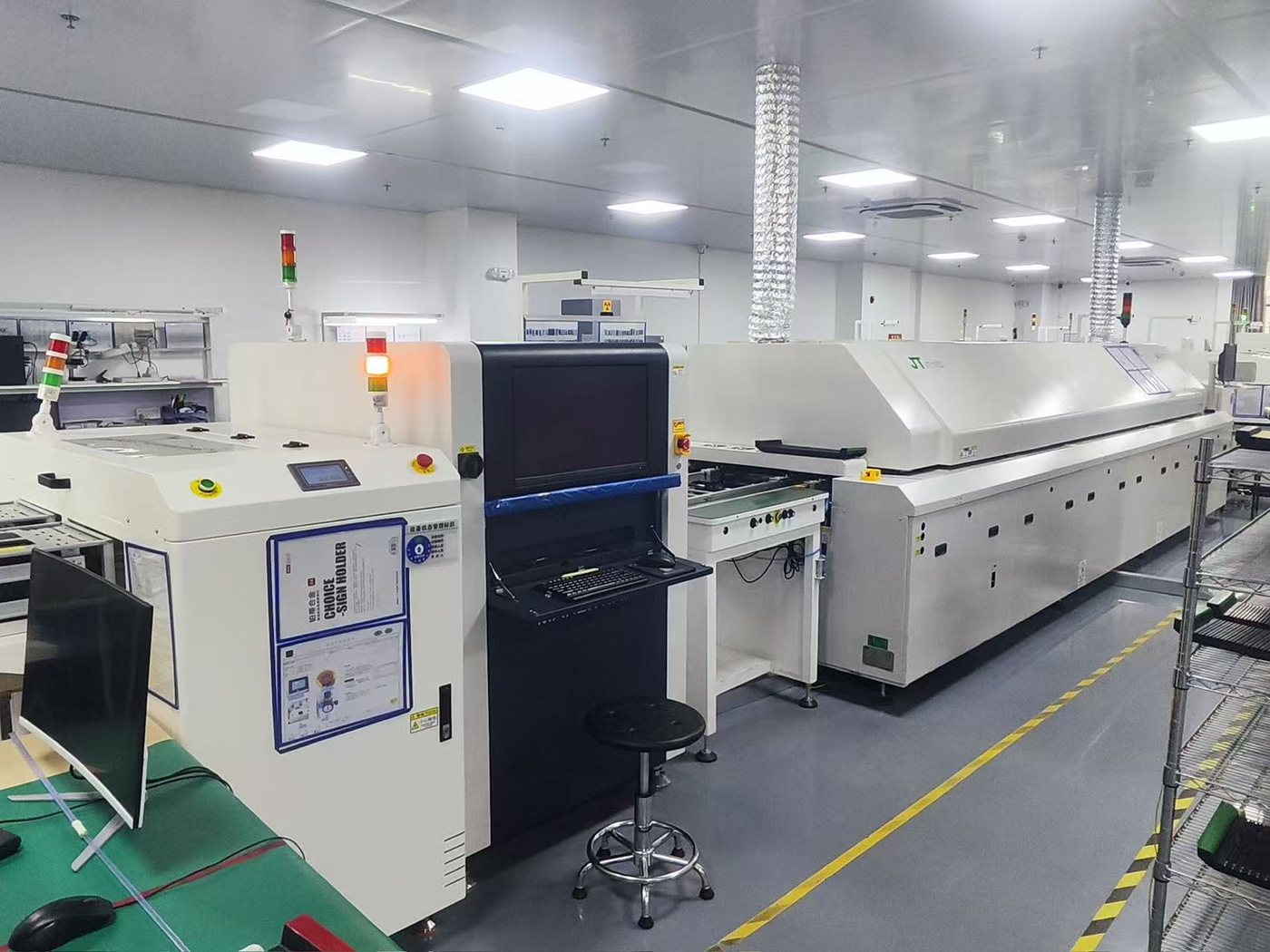
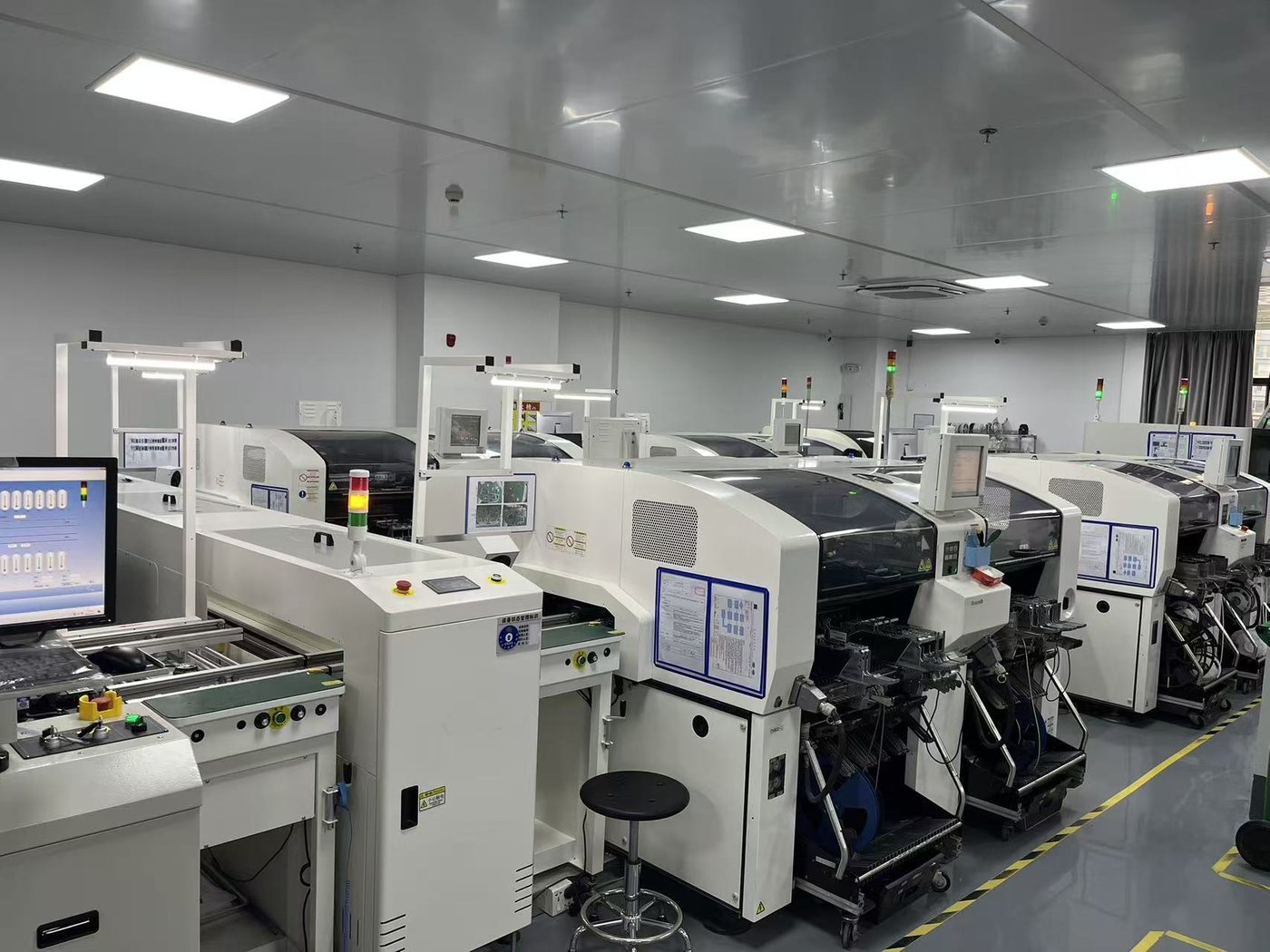
Kilandu PCBA and SMT assembly factory in Shenzhen, China

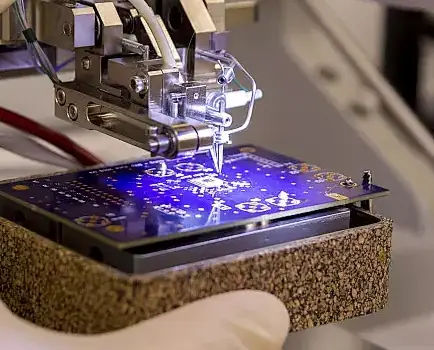
Inside the factory. Kilandu (Shenzhen Jintianlei Innovation Technology Co., Ltd.) runs 4 Yamaha YS24 + YS12 SMT lines and 3 automatic DIP lines with lead-free wave soldering — 150 million placements a month.

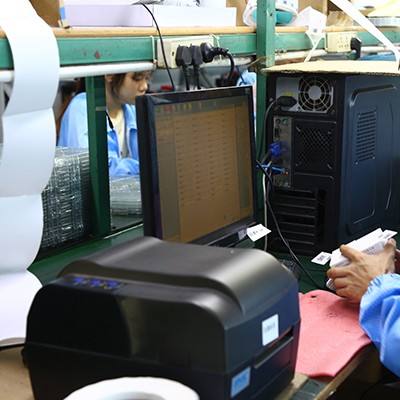
How we control quality. Tin-thickness, pull-strength, reflow profiling and full PCBA functional testing (Bluetooth, oscilloscopes, audio/video rigs) — RoHS/REACH compliant. See our quality assurance workflow.

What we build. EV charging piles, energy storage, smart-city power, vehicle vision, wearables and medical devices — assembled and box-built under one roof.

Fast facts: 4 SMT lines · 3 DIP lines · 150M placements/month · 150+ staff, 20+ engineers · ISO 9001 · IPC-A-610 Class 2/3 · RoHS/REACH.

Why choose us?

Why choose Kilandu? Because one factory in Bao'an, Shenzhen covers the whole path from Gerber and BOM to tested boards: 4 automatic Yamaha SMT lines and 3 automatic DIP lines, 150 million component placements a month, ISO 9001 and IPC-A-610 Class 2/3 quality, and turnkey component sourcing for customers in Europe, Russia and the Americas. These are the eight reasons they stay with us.

Advanced production equipment

Kilandu runs four fully automatic Yamaha YS24 and YS12 high-speed SMT lines and three automatic plug-in lines with lead-free wave soldering at our Shenzhen plant, with a monthly placement capacity of roughly 150 million components. Automated optical inspection covers every board, 3D solder paste inspection is carried out before placement, and X-ray is applied where BGA or other hidden joints are present.

What is installed on the floor

  • Four Yamaha YS24 and YS12 high-speed mounters, configured for fine-pitch and mixed-technology work.
  • GKG-G5 solder paste printing with fine-pitch capability, followed by SITEK 3D SPI.
  • Lead-free reflow with recorded profiles per work order.
  • Three automatic DIP lines for through-hole and mixed-technology boards.
  • AOI on every board, X-ray for hidden joints, and functional test to customer specification.

Why the equipment set matters more than the headline speed

The value of a line is not its theoretical placement rate but the range of designs it can hold in control. Fine-pitch device packages, 0201 passives, tall through-hole connectors and heavy copper power planes all behave differently during reflow, and a factory that only handles one of those will struggle with a mixed-technology board. Having printing, SPI, placement, reflow and inspection in one continuous flow means the process can be adjusted as a whole rather than in isolated steps.

Capacity and lead time

Monthly capacity of roughly 150 million component placements supports both prototype runs and volume production, and because bare board fabrication and assembly sit in the same supply chain, capacity can be planned together. Typical turnkey lead time is 2 to 5 weeks depending on component availability and build complexity, and longer programmes can have capacity reserved in advance. The plant works under IATF 16949:2016, ISO 9001:2015, ISO 13485:2016 and ISO 14001:2015 certified systems, to IPC-A-610 Class 2 and Class 3 acceptance criteria.

Send your Gerber and BOM for a quotation

Rich industry experience

Kilandu's team of 150+ people includes more than 20 engineers and quality specialists who have delivered turnkey PCBA for industrial control, EV charging and energy storage, automotive infotainment, medical devices, IoT, instrumentation and smart home projects across Europe, Russia and the Americas.
What that range actually means in practice

Building for several industries at once changes how a factory reads a design. An industrial control board and an automotive infotainment board may use similar packages, but they are judged against different acceptance criteria, different thermal profiles and different traceability requirements. Working across those sectors means the questions that matter tend to get asked early: which standard applies, what the board will be exposed to, and what evidence the customer needs at the end of the build.

Where our customers are

More than 3,000 OEM customers have placed production with Kilandu, predominantly in Europe, Russia and the Americas. Most are industrial electronics, automation and control manufacturers, energy and EV charging companies, medical device developers and IoT product companies - buyers who need an assembly partner that can take a complete bill of materials and return finished boards to a documented standard rather than a board house that only places parts.

What long experience changes about a project

It mostly shows up in the questions asked before production starts. Whether a part has been used before and has an approved equivalent, whether the panelisation suits the equipment, whether the customer's test specification can be automated on a fixture, and whether the acceptance class is consistent with the rest of the design - all of these are cheaper to settle at quotation than after the first build. With 150+ staff, 20+ engineers, four Yamaha SMT lines and three automatic DIP lines in Baoan District, Shenzhen, Kilandu operates as a turnkey EMS partner under IATF 16949:2016, ISO 9001:2015, ISO 13485:2016 and ISO 14001:2015 certified systems.

Send your Gerber and BOM for a quotation

Strict quality control system

Every Kilandu order runs through an ISO 9001 quality system with IPC-A-610 Class 2 and Class 3 acceptance criteria. Incoming components are checked against the BOM and the approved vendor list, and each batch ships with traceable inspection records that tie the assembly back to its material lots and process data.

The control points

  • Incoming inspection: part number, marking, quantity and date code against the approved vendor list.
  • Solder paste printing verified with 3D SPI before any component is placed.
  • AOI after reflow on every board, with X-ray for BGA, QFN and other hidden joints.
  • Outgoing inspection and functional test to the agreed specification before packing.

Standards behind the system

Kilandu holds IATF 16949:2016 for automotive work alongside ISO 9001:2015, ISO 13485:2016 for medical devices and ISO 14001:2015 for environmental management. Acceptance criteria are drawn from IPC-A-610 at Class 2 or Class 3 as the application requires, with the process side governed by IPC J-STD-001. Materials are lead-free, RoHS and REACH compliant.

Why records matter as much as inspection

Inspection only proves what was true on the day. Records are what allow a question about a specific shipment to be answered months later: which component lots went into the board, which reflow profile was used, what the AOI and test results were, and what rework was performed. Manufacturing under a certified system requires that data to be captured as part of production rather than reconstructed afterwards, and it is what makes a corrective action possible instead of a conversation.

Quality at the equipment level

The controls above run on four Yamaha YS24 and YS12 SMT lines and three automatic DIP lines with roughly 150 million component placements per month, in the factory at Baoan District, Shenzhen. Typical turnkey lead time is 2 to 5 weeks.

Send your Gerber and BOM for a quotation

Efficient testing process

Assemblies are validated with automated optical inspection and functional testing on customer-specific test fixtures before packing, and failed units go back through documented rework and retest. RoHS and REACH compliant process records and inspection data are issued with each shipment.

The test stages

  • 3D SPI on solder paste, catching volume and alignment errors before placement.
  • AOI after reflow, on every board, against a programmed reference.
  • X-ray for BGA, QFN and other joints that cannot be seen optically.
  • ICT or functional test on fixtures built to the customer's specification.
  • In-production firmware loading and checksum verification where the product needs it.

Fixtures and specification

Functional test is only as good as the specification behind it. Where a customer supplies a test procedure, a fixture is designed and built against it, and the pass and fail limits are agreed before the first production run. For programmes where no specification exists, Kilandu can work with the customer to define a basic power-up and functional test that catches the failure modes the build is most exposed to, rather than shipping untested boards.

Rework and retest discipline

A board that fails is not simply repaired and passed. Rework is performed to documented procedures, the reason for the failure is recorded, and the unit goes back through the same test it failed before it is released. Where a failure repeats across a lot, the cause is investigated at process level - stencil, reflow profile, component lot or placement programme - rather than treated as isolated. That is the difference between a test department and a control loop.

Where this runs

Testing is carried out on the same production floor as assembly: four Yamaha YS24 and YS12 SMT lines and three automatic DIP lines in Baoan District, Shenzhen, under IATF 16949:2016, ISO 9001:2015, ISO 13485:2016 and ISO 14001:2015 certified systems, to IPC-A-610 Class 2 and Class 3 acceptance criteria, with typical turnkey lead time of 2 to 5 weeks.

Send your Gerber and BOM for a quotation

Optimized cost control

Turnkey sourcing, four SMT lines and three DIP lines under one roof remove the margin stacking of a multi-vendor supply chain. Kilandu shares the BOM cost breakdown, flags long-lead and single-source parts early, and proposes pin-to-pin alternatives so cost can be designed out rather than negotiated down.

Where the cost actually sits

On most PCBA projects the bill of materials dominates the price, and the assembly charge is a smaller share than buyers expect. That means the biggest savings rarely come from squeezing the labour rate. They come from the material list: an obsolete part carrying a broker premium, a single-source connector with no second option, a surface finish that adds cost without adding function, or a panelisation that wastes board area.

What Kilandu does about it

  • Open BOM cost breakdown, so the buyer sees component, board and assembly cost separately.
  • Long-lead and single-source parts identified at quotation, with proposed pin-to-pin alternatives.
  • Panelisation reviewed to improve board utilisation before fabrication is ordered.
  • Standard finishes and materials proposed where the application does not require a premium option.
  • Quantity breaks shown explicitly, so the cost of a smaller release is visible in advance.

What we do not do

Cost reduction is not achieved by substituting unapproved parts, reducing inspection coverage or moving to a lower acceptance class without the customer's agreement. Every substitution is proposed with a comparison and requires approval, and inspection scope is part of the quotation rather than something that quietly changes. A price that is lower because the build is less controlled is not a saving.

Where the scale comes from

Kilandu (Shenzhen Jintianlei Innovation Technology Co., Ltd.) runs four Yamaha YS24 and YS12 SMT lines and three automatic DIP lines in Baoan District, Shenzhen with roughly 150 million component placements per month, under IATF 16949:2016, ISO 9001:2015, ISO 13485:2016 and ISO 14001:2015 certified systems. Typical turnkey lead time is 2 to 5 weeks.

Send your Gerber and BOM for a quotation

Efficient supply chain management

Kilandu buys from authorised and franchised distributors, so components are traceable and counterfeit risk is controlled. Long-term agreements cover passives, connectors, microcontrollers and power devices, and our Shenzhen location gives fast access to the electronics supply cluster around the factory.

Sourcing channels

Where a part is available through authorised distribution, that is the channel used, because it provides traceability and a manufacturer warranty. For parts that are only obtainable outside authorised channels, the situation is raised with the customer with the risk stated, so the decision to proceed is made knowingly. Incoming material is checked against the BOM and the approved vendor list, and lot records are retained so that any later question about a shipment can be answered from data.

Agreements and inventory

Long-term agreements on high-volume commodity parts and on the microcontrollers and power devices that appear across multiple products stabilise both price and allocation. Where a part is single-sourced or has a history of shortage, buffer stock is held against forecast, and customers running repeat production can have material reserved for their programme so it is not re-allocated to another order.

Handling shortages and obsolescence

Two events cause most supply problems: an unexpected lead-time extension and a manufacturer lifecycle notice. Kilandu tracks both and raises them as early as possible, with a comparison of pin-to-pin or functionally equivalent options and, where a last-time buy is the right answer, a quantity and storage plan agreed in advance. Because the factory sits inside the Shenzhen electronics cluster, replacement sourcing and tooling changes also move faster than they would at a distance.

The resulting capacity

Supply chain management supports roughly 150 million component placements per month across four Yamaha YS24 and YS12 SMT lines and three automatic DIP lines, under IATF 16949:2016, ISO 9001:2015, ISO 13485:2016 and ISO 14001:2015 certified systems, with typical turnkey lead time of 2 to 5 weeks.

Send your Gerber and BOM for a quotation

Social responsibility and sustainable development

Kilandu builds with lead-free wave soldering and RoHS and REACH compliant materials, and operates under Shenzhen's environmental, health and safety regulations. On request we supply material declarations, RoHS and REACH statements and packaging that meets the customer's own environmental commitments.

Environmental practice in production

The factory operates an ISO 14001:2015 certified environmental management system. In day-to-day terms that covers how solder dross, spent cleaning agents, waste laminate and packaging are segregated and disposed of, how energy use on the SMT and DIP lines is monitored, and how any spill or abnormal discharge is handled. Lead-free processes are standard, so the tin-lead exposure of an older assembly line does not arise.

People and safety

Around 150 people work at the Baoan District plant, more than 20 of them engineers and quality specialists. Production roles are covered by safe operating procedures and personal protective equipment appropriate to the process, and quality training is conducted on a regular cycle so that the standard the system specifies is the standard people actually work to.

Transparency with customers

Increasingly, buyers are asked to report on their supply chain rather than only on their own operations. Kilandu supports that by providing the documents the buyer needs to pass on: material declarations, RoHS and REACH statements, and information about the materials and processes used in a specific build. Where a customer's own code of conduct or supplier requirement goes further, it can be reviewed against what the factory actually does rather than agreed in principle.

Certifications held

Kilandu is Shenzhen Jintianlei Innovation Technology Co., Ltd., and holds IATF 16949:2016, ISO 9001:2015, ISO 13485:2016 and ISO 14001:2015. Assembly runs across four Yamaha YS24 and YS12 SMT lines and three automatic DIP lines to IPC-A-610 Class 2 and Class 3 acceptance criteria, with a typical turnkey lead time of 2 to 5 weeks.

Send your Gerber and BOM for a quotation

Perfect after-sales service system

Kilandu (Shenzhen Jintianlei Innovation Technology Co., Ltd.) provides round-the-clock online support and long-term technical follow-up after shipment. Questions are answered by the engineering team that built the boards, and traceable QC records are available for every batch that leaves the factory.

What after-sales support covers

  • Technical questions on assembly, rework, second-source approval and process limits.
  • Traceability look-ups for a specific lot, including material and inspection data.
  • Investigation of a reported failure, with production records pulled for the affected batch.
  • Corrective action agreed and applied, with containment for stock already produced.

How a problem is handled

A reported issue is acknowledged quickly and assigned a named technical contact. Production records for the affected lot are retrieved - component lots, reflow profile, AOI and X-ray results, test data - and the board and the reported failure are examined together with the customer rather than in isolation. Where the cause is in assembly or material, containment is applied to any remaining stock and the process is corrected. Where the cause is in design or application, the analysis is still shared, because a finding the customer can act on is worth more than a clean conclusion.

Why the records make this possible

Support is only as strong as the traceability behind it. Every Kilandu build carries lot-level records from component sourcing through SMT placement, DIP, inspection and test, which is why a question about a shipment from months earlier can be answered with data. The factory operates under IATF 16949:2016, ISO 9001:2015, ISO 13485:2016 and ISO 14001:2015 certified systems, which require documented corrective and preventive action rather than informal resolution, and works to IPC-A-610 Class 2 and Class 3 acceptance criteria.

Long-term partnership

Repeat production, second-source qualification, engineering change support and capacity planning for future releases are all part of the relationship after the first shipment. More than 3,000 OEM customers have placed production with Kilandu across Europe, Russia and the Americas, most of them returning for further programmes.

Send your Gerber and BOM for a quotation

Application

Kilandu (Shenzhen Jintianlei Innovation Technology Co., Ltd.) supplies turnkey PCBA to 3,000+ OEM customers across eight application areas: medical devices, automotive infotainment, smart home, energy storage, VFD, industrial equipment, IoT and AI hardware.

Frequently Asked Questions

What is turnkey PCBA manufacturing?+
Turnkey PCBA means a single supplier handles everything for you: PCB fabrication, SMT and through-hole assembly, component sourcing, functional testing, conformal coating and final box build. You send the Gerber files and BOM, and we deliver tested, ready-to-use boards.
Which industries do you serve?+
We mainly serve industrial electronics, industrial automation, control systems, EV charging, medical devices, automotive infotainment, IoT, instrumentation and consumer electronics manufacturers that need reliable OEM/ODM PCBA.
Do you support both prototyping and mass production?+
Yes. We support low-volume prototyping, NPI trials and high-volume mass production under one quality system, so your design can scale from sample to shipment without changing suppliers.
What certifications does your factory hold?+
Kilandu holds IATF 16949:2016 (IATF No. 0596984, IATF USI L3A259), ISO 9001:2015 (cert. CN27125Q0392R0S), ISO 13485:2016 (cert. 35825MDQMS0021R0S) and ISO 14001:2015 (cert. CN27125E0142R0S) management-system certifications, plus UL listing (File No. E352816). Production follows IPC-A-610 Class 2/3 acceptance criteria with RoHS and REACH compliant processes, and every batch ships with traceable inspection records and test reports.
Can you source components globally?+
Yes. We source components from authorised global channels, support full BOM sourcing, and can advise on equivalent or alternative parts when originals are long-lead or allocated, with your approval.
What is your typical PCBA lead time?+
Prototypes usually ship within 1 to 2 weeks, while mass production lead time depends on BOM and order quantity and is confirmed after a formal quotation. Urgent orders can be prioritised on request.