Conformal Coating for Box Build Assemblies
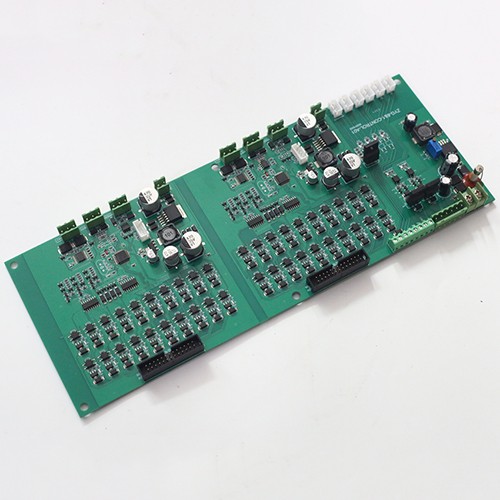
| Coating sits between board-level test and mechanical integration. | |
| Masking is read from the harness and assembly drawings. | |
| A sealed enclosure changes the chemistry choice. |
Conformal Coating for Box Build Assemblies
In a box build programme the coating decision is made twice: once when the board specification is written, and again when the assembly sequence is laid out. The second decision is the one that gets missed. A board can be correctly coated and still arrive at the enclosure with coating where a connector has to mate, or with a masking plan that no longer matches the harness drawing it was written against.
Where coating sits in the sequence
Coating is placed after board-level test and before mechanical integration. Board-level functional test confirms the assembly works before an irreversible film goes on; integration then starts from a coated, inspected board rather than a bare one. The order also keeps the failure contained: a board that fails coating inspection stays a board-level rework, before any harness or enclosure hardware is committed to it.
The steps around it are fixed. Cleaning and, where specified, ionic contamination verification come first, then masking, application, cure, and inspection of coverage and thickness. Masking is removed at integration, not before. Harness assembly, firmware loading and unit-level functional test follow, and the unit is serialised and packed last.
Masking follows the harness drawing, not only the board
Most of the keep-out areas on a box build assembly are defined by what happens after coating, not before it. Connector housings that a harness plugs into, press-fit and screw terminals, earthing studs, thermal pads under a heatsink, and any test point that unit-level test has to probe all have to stay clear. Where the harness is made to the customer drawing, that drawing already lists the connectors, so masking is read from it rather than reconstructed on the line.
The failure to avoid is a mask that was correct at board level and wrong at unit level: a connector left open that the enclosure later seals against a gasket, or a screw terminal masked on the board and then covered again by hardware fitted at integration.
What a sealed enclosure changes
A sealed enclosure changes the thermal environment the coating sees. Heat that was carried away by open air on a bench now has to leave through the case, and the film sits between the board and that path. Coating is not a thermal solution. Where a component needs a heatsink or a thermal pad, that area stays masked and the interface is added at integration rather than coated over. The chemistry is chosen against the temperature the unit will see in service, which is why the material question belongs with the enclosure specification and not with the board alone.
Rework after the unit is closed
Once the unit is closed, reaching a coated board is a disassembly job. That is worth deciding before the build rather than after. Headers used for programming, connectors likely to be re-mated in the field, and any part the customer expects to replace should be masked rather than coated, with the reason recorded against the drawing. Where a repair is needed, the film is removed locally, the joint reworked and the area recoated, and the record of that rework travels with the serial number.
Inspection and the unit record
Coating is inspected to IPC-A-610 criteria for coverage and voids, with UV inspection where the material carries a tracer, and thickness measured on the cured film. In a box build programme the coating record is attached to the unit serial number alongside the harness continuity check and the unit-level test result, so the file the customer receives describes the whole unit rather than the board alone. How those records are held is set out on the quality assurance page.
What to send with a box build enquiry
Send the assembly drawing with the keep-out areas marked, the harness drawing, the operating environment, and the test specification if one exists. Where coating is part of the requirement, say so at quotation stage: the material, masking plan and method are then fixed together with the assembly drawing instead of being added after the first build. Material selection and application methods are covered on the conformal coating page, and the ordering sequence is set out on how to order PCBA.
Why Kilandu for turnkey PCBA and PCB
Turnkey, one factory
Gerber and BOM in, tested boards out: component sourcing, SMT, DIP, box-build and functional test under one roof in Shenzhen.
Production capacity
Line count, placement equipment and monthly capacity are documented on the factory capabilities page.
Quality system
Certificates, inspection stages and lot traceability are documented on the quality assurance page.
Markets and lead time
We supply OEM customers across Europe, Russia and the Americas; typical turnkey lead time is 2 to 5 weeks, depending on BOM complexity and component availability.
- Previous:Four-port WIFI gateway PCBA
Frequently asked questions
What exactly does Kilandu deliver for a custom PCBA project?
A turnkey service: we source the full bill of materials, fabricate the PCB, run SMT and DIP assembly, and finish with AOI, inspection and functional testing, so you receive tested, ready-to-install boards from one factory.
Which quality standards is the factory certified for?
Production follows IPC-A-610 Class 2/3 workmanship under a certified quality system, with RoHS and REACH compliant processes. The certificates and what each one covers are listed on the quality assurance page.
Which markets do you serve and how fast can you deliver?
We supply OEM customers across Europe, Russia and the Americas from our factory in Shenzhen, China, with typical turnkey lead times of 2 to 5 weeks depending on BOM complexity and volume.