

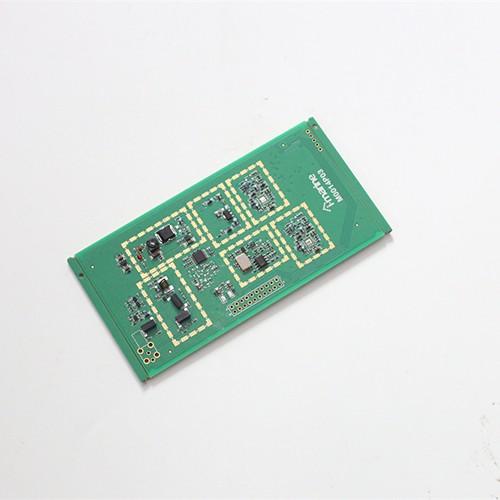
Medical PCBA
- Medical PCBA refers to the assembly process of printed circuit boards in medical equipment. These circuit boards integrate various electronic components through precise assembly processes to form circuit board assemblies with specific functions.
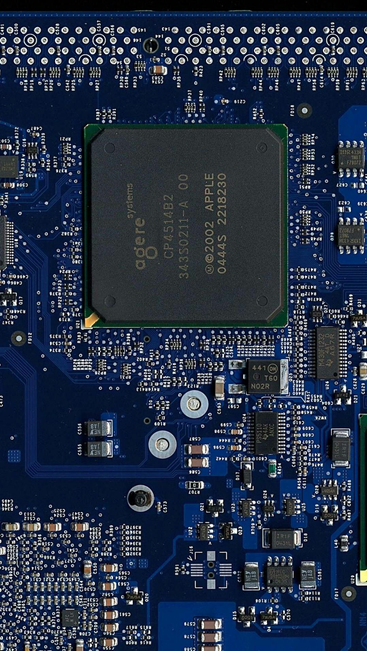
Medical blood glucose meter PCBA
- Medical blood glucose meter is a medical device used to monitor blood glucose levels, which is essential for diabetic patients. Blood glucose meter PCBA (Printed Circuit Board Assembly) is the core component of this device, which integrates key electronic components such as sensors, displays, microprocessors, etc. to achieve accurate measurement and data management of blood glucose levels.
Medical Device PCBA Manufacturing
Medical electronics are usually not the most technically demanding boards a factory sees. What makes them different is the consequence of failure and the evidence required afterwards. A board that goes into a patient monitor has to be built to a documented standard, from material whose origin can be shown, with records that still exist years later when someone asks a question.
What the documentation regime involves
- A quality system registered for medical device manufacturing, with documented change control and corrective and preventive action.
- Class 3 acceptance for most patient-facing and diagnostic products, and Class 2 where the product and the customer specification allow it.
- Lot-level traceability from incoming inspection to the finished assembly, including component supplier and date code, process profiles and test results.
- Material declarations for RoHS and REACH where the product has to report against restricted substances.
- Confidentiality under agreement, with project data and customer tooling held and identified separately.
Where medical boards concentrate their risk
Two areas come up repeatedly. The first is cleanliness: flux residue that is harmless on an industrial board can matter on a sensor front end, where leakage currents and surface resistance affect the measurement, so the cleaning process and the ionic cleanliness check are specified rather than assumed. The second is thermal history: many medical assemblies carry sensors, precision references and sometimes battery cells whose characteristics shift if they see more heat than they should, which means the reflow profile has to be set for the whole board rather than for the largest joint on it.
Traceability in practice
Traceability is only useful if it reaches the material. Every board can be tied back to the component lots used, checked against the bill of materials and the approved vendor list on arrival, and to the paste printing, placement, reflow, soldering and inspection records for that build. That is what turns a field question into an investigation with evidence rather than a conversation about whether the process is under control.
Prototype through production
Medical programmes often start with a small build and grow slowly, so there is no fixed minimum order quantity and prototype and production runs use the same lines and the same process route. Files are reviewed for manufacturability before the first build, and anything that would affect yield, cleanliness or thermal exposure is raised while the design can still be changed cheaply. Where the design carries sensors, precision references or cells with a thermal limit, that is raised before the reflow profile is fixed. The acceptance classes and the documentation regime described here are set out in more detail under quality assurance.
Certified quality systems. Medical device PCBA is built under ISO 13485:2016, certificate 35825MDQMS0021R0S, issued by Guangdong ZQ Certification Service Co., Ltd. (CNAS C271-M) and valid to 29 June 2028, scope production, assembly and sales of PCBA for medical devices. The same management system runs ISO 9001:2015 (cert. CN27125Q0392R0S) and ISO 14001:2015 (cert. CN27125E0142R0S), and automotive work on the same lines runs under IATF 16949:2016 (IATF No. 0596984). UL File No. E352816 is referenced only for assemblies covered by that file. Every certificate number, issuing body, scope and validity date is published on the quality assurance page and can be verified directly with the issuing body.
- Factory environment

What a medical build has to prove
Medical device PCBA built under an ISO 13485:2016 certified quality system, typically to IPC-A-610 Class 3, with lot-level traceability from incoming material to finished assembly. Prototype and production builds run on the same lines.
Where medical device boards are used
Each application area has its own assembly requirements. What changes from a medical instrument to a motor drive is the process, the acceptance class and the design rules that matter, and the pages below set out what is different about each one.