

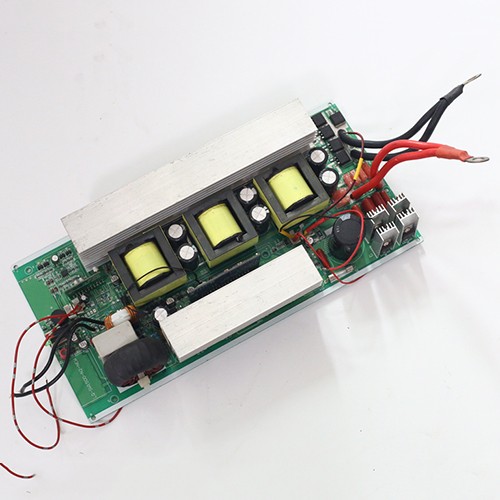
Special board PCB
- Special board PCB is mainly used in special application scenarios such as high frequency and high reliability.
- Special board types:
- 1. High frequency materials: such as Panasonic's Megtron 6, Rogers3003/RT5880, etc., suitable for high frequency signal transmission.
Special PCB Constructions and Non-Standard Substrates
Most boards are FR4, and that is a good thing: the material is well understood, the process is mature and the cost is predictable. The problems start when a design cannot use it, and the answer is not always a different supplier for the whole programme. Often it is one construction inside a programme that otherwise runs normally.
Constructions that come up in practice
- Aluminium and metal core boards. An insulated metal substrate with a conductive base, used where heat has to move out of a device and into a larger area, most often in LED lighting and drivers, power converters and motor control.
- Ceramic substrates. Used where thermal conductivity and high-frequency performance are required together, typically for high-power RF and for devices where the dielectric losses of FR4 are not acceptable.
- Flexible and rigid-flex circuits. Used where the board has to fold into an enclosure, survive repeated movement, or replace a connector and cable harness with a continuous conductor.
- Heavy copper and mixed stack-ups. Where a power layer and a standard signal layer are combined on one board, or where different materials are laminated into a single construction.
Why the reason behind the construction matters
A special construction is a cost, and it is worth paying only when the alternative is worse. Starting the review from the reason rather than the material keeps that proportionate: if the problem is thermal, the question is whether a metal core spreads heat better than a heavier copper layer on FR4 at a lower cost. If the problem is a cable harness that fails in the field, a rigid-flex tail may remove a whole assembly step rather than simply complicate the board. Where the reason is not clear, it is raised before quotation rather than designed around.
Where the risk concentrates
On a rigid-flex board the risk sits at the transitions between rigid and flexible sections, where the stiffener, the coverlay and the bend radius all have to be specified together. On a metal core board it sits at the dielectric layer, which is thin and easily damaged during assembly if the profile is wrong. On flex circuits it sits at the connector attach and the strain relief. Because fabrication and assembly run in the same chain here, those interfaces are specified once, by one party, instead of being negotiated between a board shop and an assembler who each see only their half.
Starting a special construction programme
Send the drawings or Gerber files, the reason the standard construction does not apply, the quantity, and the mechanical or thermal requirement the board has to meet. Where the design is still open, say so, because the choice between a metal core, a heavy copper layer and a ceramic substrate is usually cheaper to make before the tooling exists. Special lamination cycles and non-standard constructions are quoted against the actual build rather than a standard lead time. Metal core and heavy copper boards, which are often the first alternative considered, are covered under thick copper PCB.
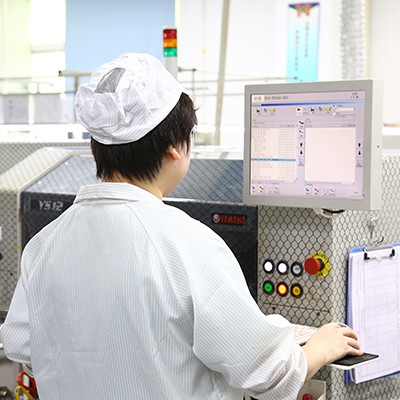
- Factory environment
Why choose us?
Special and non-standard constructions: aluminium and metal core boards, ceramic substrates for high-power or high-frequency work, flexible and rigid-flex circuits, thick copper, and mixed material stack-ups, fabricated and assembled in the same chain.
Application
Each application area has its own assembly requirements. What changes from a medical instrument to a motor drive is the process, the acceptance class and the design rules that matter, and the pages below set out what is different about each one.