

The October 2026 component market is not short of silicon — it is short of specific grades. Multi-layer ceramic capacitors (MLCC) for automotive and industrial grades now lead out to roughly 26–40 weeks against a pre-shortage baseline of 8–12 weeks, and major suppliers are raising prices only on the high-end. For a PCBA buyer, the practical consequence is that the qualification decisions made this quarter determine whether 2027 build slots hold.
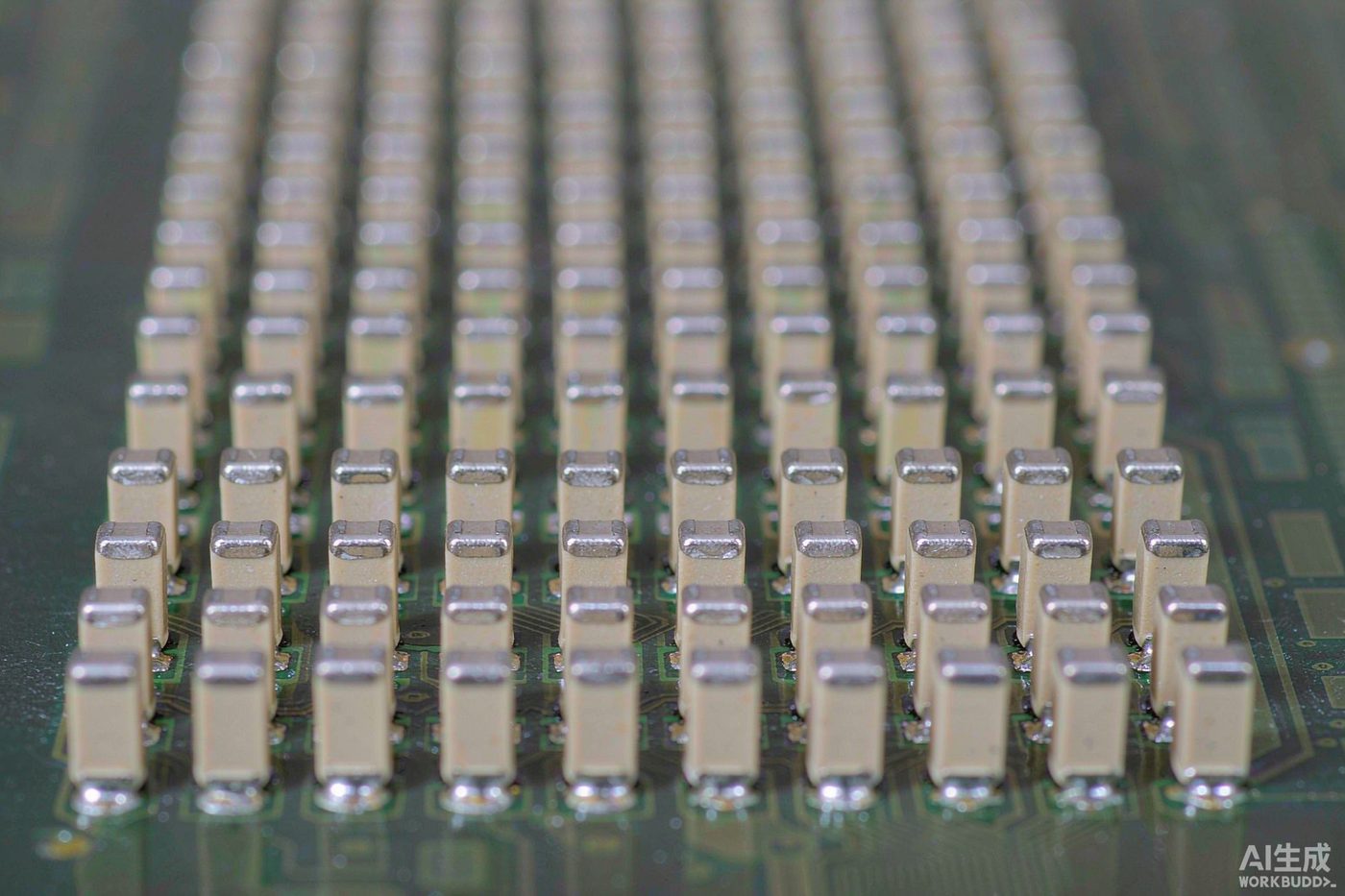
The shortage has moved out of GPUs and into memory, storage and passives
Through 2024 and most of 2025, the defining image of the component shortage was a GPU allocation queue. That picture has inverted. In TrendForce's October 5, 2026 Supply Chain Radar, graphics processors were the only one of seven tracked server-component categories sitting at a balanced level. CPUs, DRAM, enterprise SSD NAND, hard disk drives, ABF substrates and MLCCs were all classified as tight or very tight.
The lead-time comparison makes the migration concrete:
| Component | Current lead time | Balanced benchmark | Multiple of normal |
|---|---|---|---|
| GPU | 30–40 weeks | 30–40 weeks | ~1.0× (balanced) |
| DRAM | 20 weeks | 8 weeks | 2.5× |
| Enterprise SSD NAND | 16 weeks | 8 weeks | 2.0× |
| MLCC | 35 weeks | 12 weeks | ~2.9× |
| HDD | 50 weeks | 16 weeks | ~3.1× |
| ABF substrate | 48–56 weeks | 12 weeks | 4.0–4.7× |
A GPU lead time of 30–40 weeks looks alarming until you compare it to the same research firm's own definition of balance. An ABF substrate at 48–56 weeks against a 12-week benchmark is a different order of problem entirely, and it sits upstream of every accelerator-bearing board.
For industrial and automotive PCBA programmes, the relevant entry point is the passive layer. MLCC is the component-count backbone of a control board, and the grade you specify determines who can actually ship it.
Pricing is being applied selectively, which means the market is segmenting
A common misreading of "MLCC prices are rising in 2026" is that all capacities moved together. The announced increases do not look like that. Every major supplier has chosen to price the shortage rather than broad-based inflation.
- Murata raised prices on automotive and industrial high-end MLCC in the range of 3–8% in one reported action, and separately notified core customers of 15–35% increases on AI-server and automotive grades. Consumer-grade regular MLCC pricing was held flat.
- Samsung Electro-Mechanics raised consumer X5R prices by an average of 25–30% for Q4 2026 in order to suppress demand and protect high-end line expansion, while running down low-end phone-grade production.
- TDK and Taiyo Yuden followed the same split: increases confined to industrial and automotive high-end grades, consumer grades unchanged.
- YAGEO applied a line-wide increase from July 1, 2026, with maker-level average contract prices up 50% and AI-server/automotive high-capacitance parts above 40% — notably reaching direct OEM and EMS accounts for the first time rather than distributors only.
- Walsin raised part of its MLCC and resistor range from June 1, 2026, citing raw material and energy costs.
On the demand side, an AI server consumes roughly 8–12× the MLCC content of a conventional general-purpose server, and a battery electric vehicle uses about 6× that of an internal-combustion car. That demand ratio, layered onto a high-end production base that cannot be converted quickly, is what produces selective rather than universal shortage.
Why capacity cannot respond on your schedule
The binding constraint is not capital. It is production-line conversion economics.
High-end MLCC capacity additions run on an 18–24 month construction cycle, and converting an existing line is worse than building for many grade transitions. Reported conversion ratios illustrate the point: moving standard product to high-capacitance production can destroy up to 80% of existing output, and moving consumer lines to AI-grade ultra-high-capacitance has been reported at a 7:1 replacement ratio. Utilisation at Murata's high-end lines has run at 90–95%, with inbound enquiries reported at roughly twice available capacity.
Murata's response illustrates both the effort and the delay. Its FY2026 capital expenditure is reported at approximately ¥250 billion, of which an incremental ¥80 billion is earmarked for MLCC capacity, translating to an increase of more than 20% in MLCC capacity by FY2027. New capacity opened at Izumo on April 3, 2026, with additional Japanese lines starting in Q2. Those lines are being allocated to automotive and AI-server grades first, with low-end consumer utilisation deliberately reduced.
The structural consequence is straightforward: a shortage that began as an AI-infrastructure problem now transmits into standard industrial and automotive boards, because the same board houses both a demanding and a relaxed grade. Analyst estimates put the tight high-end MLCC balance through 2027 or 2028, and TrendForce expects ABF substrate prices to rise 10–15% quarter over quarter from Q3 2026 through Q4 2027.
What this means for a PCBA programme
If you assemble boards rather than make components, the practical decisions are about specification, allocation and evidence.
- Specify grade early. An automotive or industrial high-reliability MLCC should be designated with its voltage, temperature characteristic and reliability grade at schematic review — not at first purchase order. Grade ambiguity at quotation stage is what creates substitution disputes later.
- Ask what your supplier has physically allocated. The distinction between a signed purchase order for long-lead material and confirmed allocated stock is the difference between a delivery date and a hope.
- Lock long-lead items in writing, including passives. Allocation letters and bonded-inventory agreements currently carry more protection than last year's framework contract, because pricing is moving weekly rather than annually.
- Separate high-reliability BOMs from commodity runs. Mixing automotive-grade and consumer-grade lots on one line risks cross-contamination and lot-to-lot drift, both of which land as yield loss in first-article inspection.
- Plan against qualification time, not quoted lead time. A new grade entering a controlled assembly process typically needs a first-article plus process-characterisation cycle before volume. Add that to any lead time a component supplier quotes.
Kilandu runs 4× Yamaha SMT and 3× DIP lines with a combined monthly capacity of 150 million placement points, and works to BOM procurement as a turnkey package. Our production lead times are stated separately from component lead times for exactly this reason: mass production 2–5 weeks, prototypes 5–8 working days, repeat orders 2–3 weeks — all measured from confirmed material availability, not from order date. Detailed capability figures are on our factory capabilities page, and the boundary between our lead-time commitments and upstream material timing is set out in PCBA MOQ and lead time.
What buyers ask us first
Are industrial and automotive MLCC actually affected, or is this only an AI-server problem?
Both. Supplier price increases have been applied selectively to automotive and industrial high-end grades at Murata, TDK, Taiyo Yuden and Walsin, while consumer grades were held flat or, in Samsung Electro-Mechanics' case, raised deliberately to deter low-margin volume. Automotive and industrial programmes sit on the constrained side of that split.
How far have lead times moved, against what baseline?
TrendForce's October 2026 radar puts MLCC at roughly 35 weeks against a balanced benchmark of 12 weeks. Separately reported figures put high-capacitance MLCC at 26–40 weeks, where pre-shortage baselines were 8–12 weeks, with some Samsung Electro-Mechanics products averaging around 40 weeks.
If I am not building AI servers, should I still budget for allocation?
Yes, on any board using automotive or industrial-grade high-capacitance MLCC. The underlying capacity constraint is the same. The reported 18–24 month high-end expansion cycle means a decision made this quarter affects your 2027 supply position, independent of which segment you sell into.
Can a PCBA assembler protect my programme from component volatility?
An assembler controls three things: whether the BOM is quoted with exact manufacturer part numbers rather than generic equivalents, whether long-lead material is purchased against written confirmation before a build slot is released, and whether substitutions require your written approval rather than assembler discretion. It cannot remove component risk, but it can make that risk visible before you commit a build date.
Sources
- "TrendForce Says GPU Is No Longer the Main AI Server Bottleneck as Memory, HDD and ABF Stay Tight" — AI Industry Today, October 2026. aiindustrytoday.com
- "MLCC shortage in 2026: how the major makers shifted capacity and price" — RunToptech, 2026. runtoptech.com
- ChipsourceTek, "MLCC enters a super-cycle after memory" — vendor announcement aggregation, 2026.
- "AI server passive component demand rises sharply, MLCC shortage and price increases continue" — Jiemian News, October 9, 2026. jiemian.com
- Industry research summary citing Tianfeng, Guohai and Shenggang Securities on MLCC capacity optimisation, September 2026.
- "Copper-clad laminate shortage and price increases continue, passing effects downstream" — Jiepei, October 2026. jiepei.com
Lead-time and pricing figures in this article are reported from supplier announcements and third-party supply-chain trackers rather than from Kilandu's own purchasing records. Buyers should confirm current allocation and pricing with their component distributors or manufacturers before committing a build schedule.
-
Passive Component Lead Times Are Rewriting PCBA Sourcing Decisions in 2026
-

A warm welcome to Mr. Jason Connor and Mr. David from Luxembourg for their guidance!
-

The PCBA Industry at the Start of 2026: AI Drives Market Surge, Intelligent Manufacturing and Material Upgrades Become the Main Themes
-
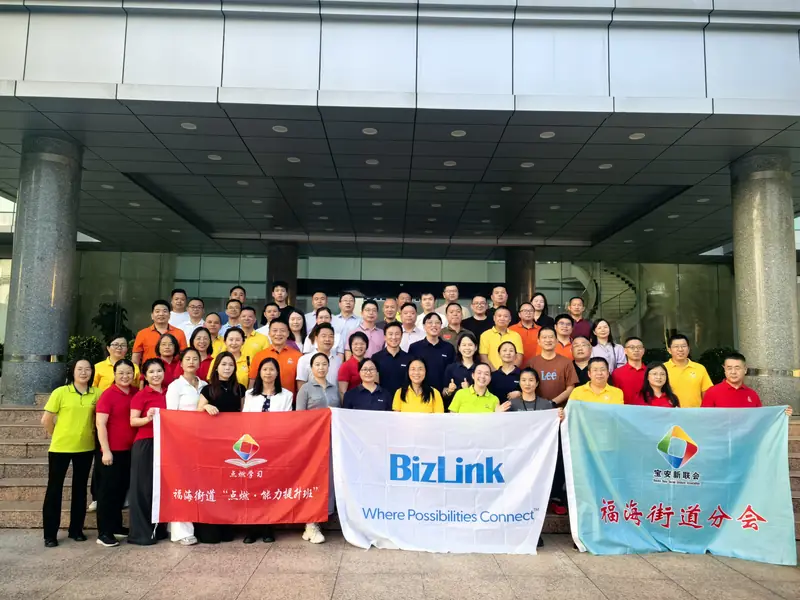
Connecting Infinite Possibilities | Bao'an District New Union 'Ignite Learning' Class (including our Shenzhen Jintianlei Innovation Technology Co., Ltd.) visited Biz Link to discuss new development op
-
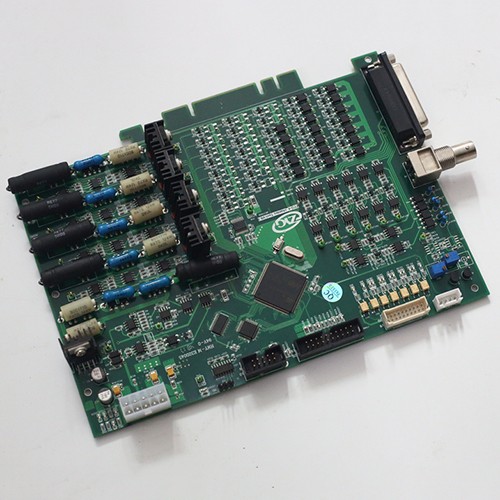
The core process of PCBA product customization
-
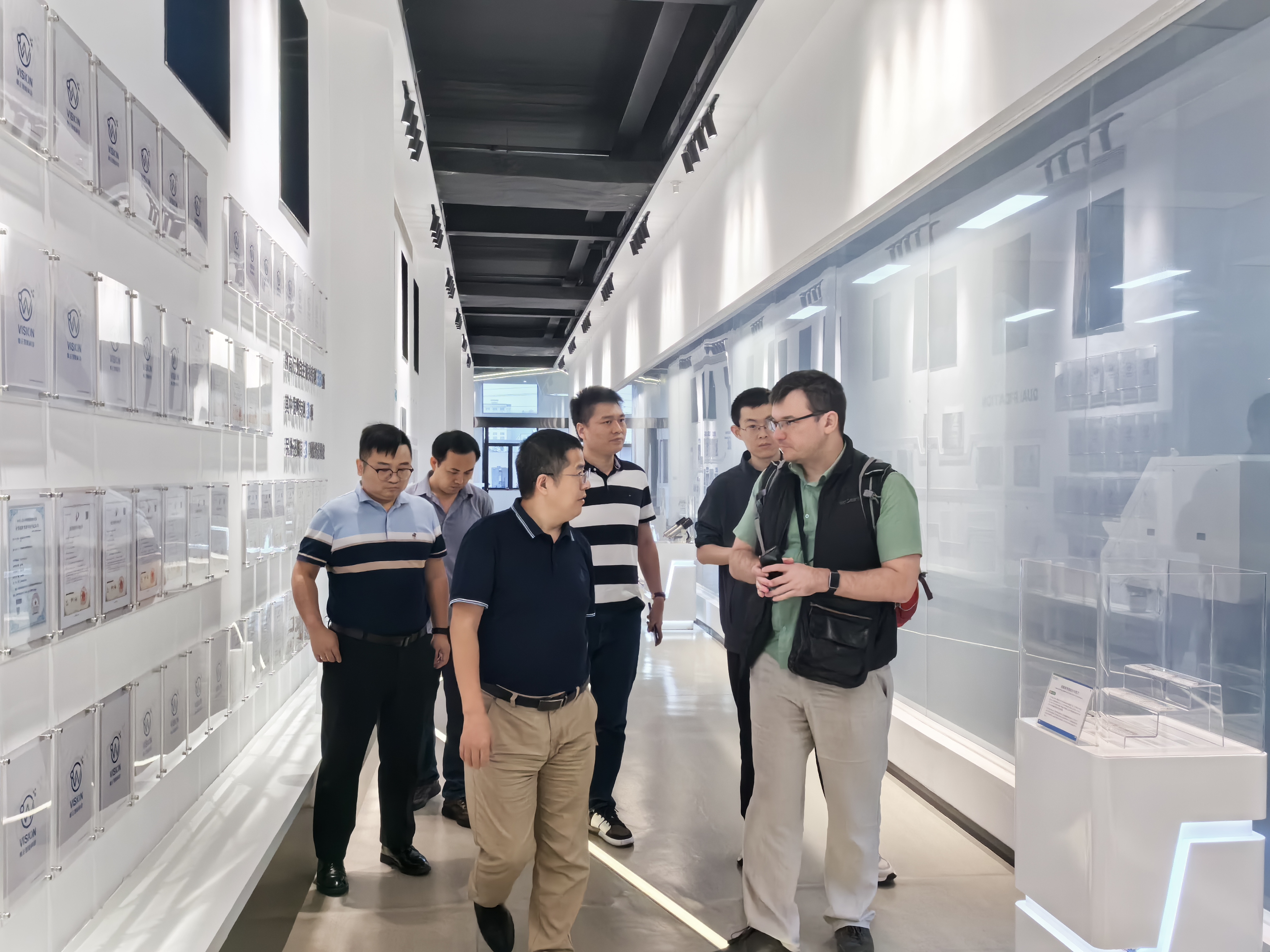
Welcome customers to visit our branch companies for factory inspection and guidance
-
ExpeElectronica2024 in Munich, Germany
-
PCBA industry global prospects
-
Connecting Infinite Possibilities | Bao'an District New Union 'Ignite Learning' Class (including our Shenzhen Jintianlei Innovation Technology Co., Ltd.) visited Biz Link to discuss new development op
-
Explore the future trends of the PCBA industry! How can you make your production line more efficient with the help of intelligent technology?