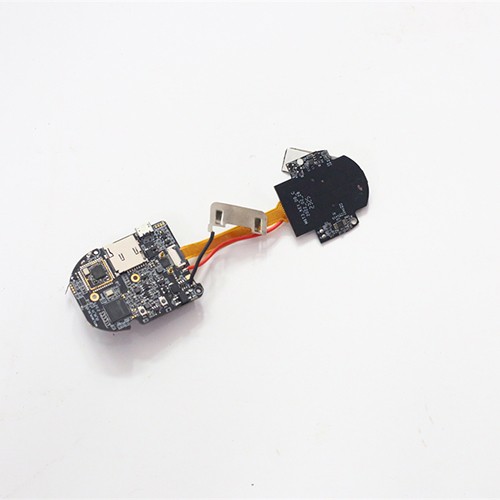
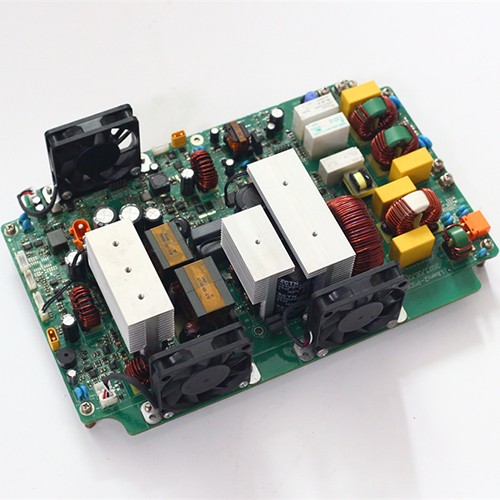
Inverter product motherboard
| The inverter product PCBA is the core component of the inverter, which is responsible for the inverter's signal processing, control logic and drive output. |
The inverter product PCBA is the core component of the inverter, which is responsible for the inverter's signal processing, control logic and drive output. The technical specifications and application areas of inverter PCBA are as follows:
Technical specifications:
1. Input voltage: Inverter PCBA usually supports multiple input voltage levels, such as 380V, 400V, 500V, etc., to adapt to different power grid environments.
2. Output voltage: Depending on the model and application requirements of the inverter, the output voltage will also be different. Common analog outputs include 0-10V, 0-20mA, etc. .
3. Control mode: The inverter PCBA can realize multiple control modes such as sensorless vector control and sensor control .
4. Power unit: The power unit in the inverter PCBA is the key part to realize the frequency conversion function, and usually has different rated current specifications, such as 40A, 75A, 100A, etc. .
Application Areas:
1. Industrial Automation: Inverter PCBA is widely used in industrial automation equipment, such as conveyor belts, injection molding machines, textile machinery, etc., for speed regulation and energy saving.
2. Energy management: In energy management systems, inverter PCBA is used to optimize energy use and improve energy efficiency.
3. Transportation: In rail transportation, electric vehicles and other fields, inverter PCBA is used for motor control and power output.
4. Infrastructure: In infrastructure such as water supply and sewage treatment, inverter PCBA is used for the control of pump stations and fans.
5. The design and manufacture of inverter PCBA need to consider factors such as electromagnetic compatibility, thermal management, reliability and safety to ensure that the inverter can operate stably in various environments. With the continuous advancement of technology, inverter PCBA is also constantly innovating technology and improving performance.
Why Kilandu for turnkey PCBA and PCB
Turnkey, one factory
Gerber and BOM in, tested boards out: component sourcing, SMT, DIP, box-build and functional test under one roof in Shenzhen.
Production capacity
Line count, placement equipment and monthly capacity are documented on the factory capabilities page.
Quality system
Certificates, inspection stages and lot traceability are documented on the quality assurance page.
Markets and lead time
We supply OEM customers across Europe, Russia and the Americas; typical turnkey lead time is 2 to 5 weeks, depending on BOM complexity and component availability.
- Previous:Frequency conversion equipment PCBA
Frequently asked questions
What exactly does Kilandu deliver for a custom PCBA project?
A turnkey service: we source the full bill of materials, fabricate the PCB, run SMT and DIP assembly, and finish with AOI, inspection and functional testing, so you receive tested, ready-to-install boards from one factory.
Which quality standards is the factory certified for?
Production follows IPC-A-610 Class 2/3 workmanship under a certified quality system, with RoHS and REACH compliant processes. The certificates and what each one covers are listed on the quality assurance page.
Which markets do you serve and how fast can you deliver?
We supply OEM customers across Europe, Russia and the Americas from our factory in Shenzhen, China, with typical turnkey lead times of 2 to 5 weeks depending on BOM complexity and volume.